March 18, 2026
The EHR Was Built for Billing, Not Care. A New Wave of Startups Is Fixing That with LLMs

Munish Bhatia
Partner @ VC | India Accelerator & Finvolve | Seed to pre-IPO
Index
Introduction
In today’s world, what is the biggest challenge in delivering better patient care? It’s not medical knowledge, but the software designed to support it. Electronic Health Record (EHR) systems were originally built to manage insurance claims, billing codes, and compliance reporting, not clinical workflows. For that reason, physicians often spend more time navigating digital templates than interacting with patients.
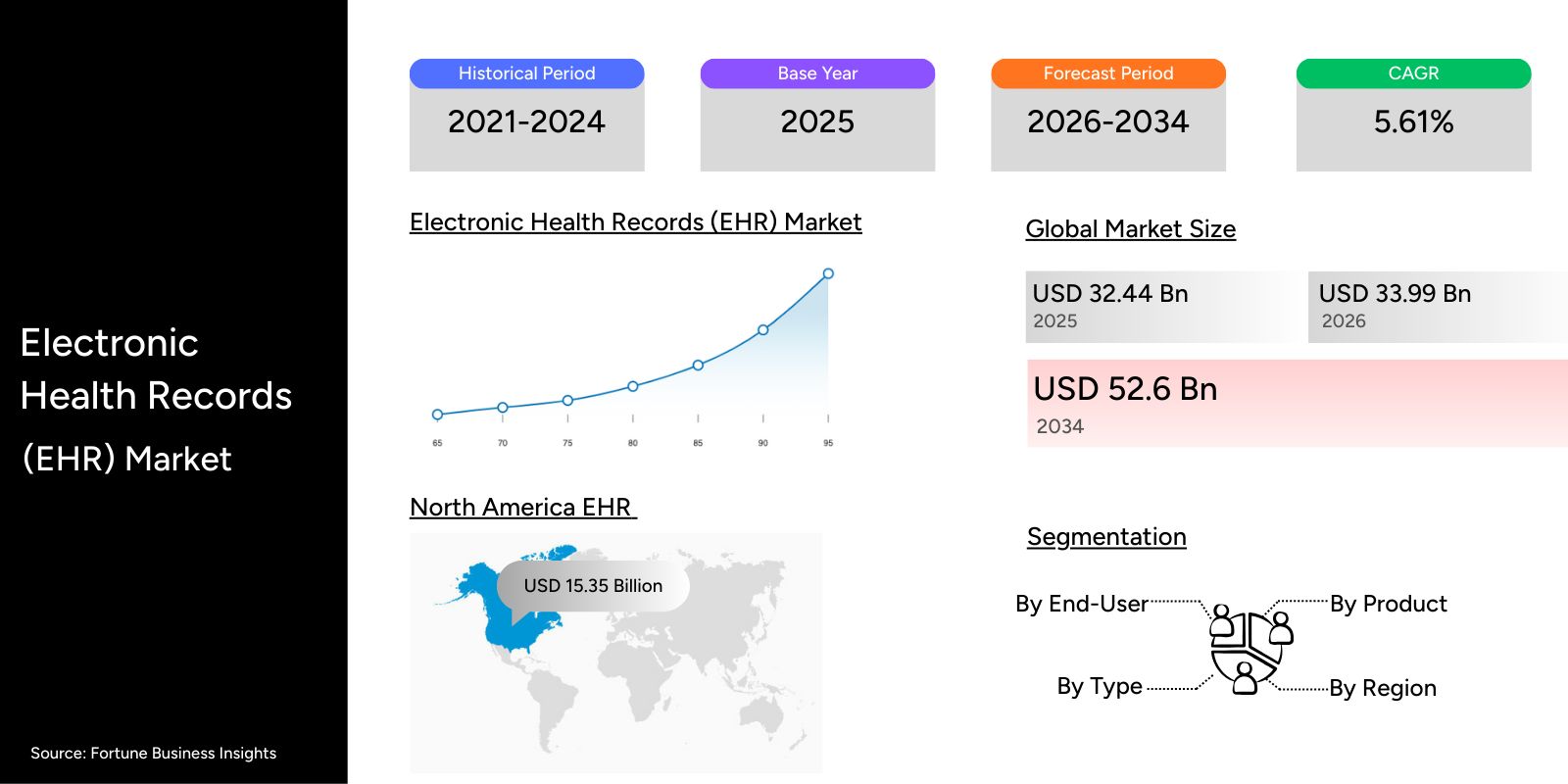
Despite widespread adoption, the problem persists. According to Fortune Business Insights, the global EHR market was valued at around $32.4 billion in 2025 and is projected to reach $52.6 billion by 2034, highlighting how deeply these systems are embedded in healthcare infrastructure. Yet nearly 78% of physicians report challenges, including documentation burden, fragmented records, and inefficient workflows. This disconnect is creating space for a new generation of health technology companies aiming to redesign digital records around the realities of clinical care.
These innovations are increasingly being discussed at healthtech conferences in India, where startups, investors, and policymakers explore solutions for smarter healthcare systems.
Turning Medical Records into Clinical Intelligence
For decades, electronic health records have behaved like digital filing cabinets, excellent at storing information but poor at helping clinicians interpret it. The emergence of Large Language Models (LLMs) is beginning to challenge that design. Instead of simply recording what happens in a clinic, AI systems can now analyze and structure clinical conversations, physician notes, and patient histories in real time.
This shift could redefine what medical records actually do in clinical care. Rather than acting as a passive archive, health data can become an intelligent layer that highlights patterns, summarizes complex histories, and surfaces insights clinicians might otherwise miss. Early clinical AI studies suggest diagnostic sensitivity above 90% for certain conditions, indicating that AI-assisted records could become an important support system for medical decision-making.
If this transformation scales, the most meaningful impact may not be technological but human: doctors spending less time documenting care and more time delivering it. These topics are increasingly highlighted at healthtech conferences in India, showcasing how AI can improve clinical workflows while maintaining patient-centric care.
Reimagining Digital Records Around the Patient
India’s emerging health-tech platforms are challenging a long-standing assumption: that medical records should primarily serve administrative systems. A new generation of startups is building digital record platforms designed around clinical workflows and patient accessibility instead.
The goal is not just digitization but continuity. By enabling interoperable records that can move across providers and platforms, these solutions aim to ensure that medical histories follow the patient rather than remain confined to individual hospitals. If successful, this approach could redefine how healthcare data is shared, accessed, and used across the ecosystem.
The importance of this transformation has also fueled discussions around healthcare policy reform in India, enabling policies that support interoperability, AI integration, and patient-centered care.
Building the Digital Backbone of Healthcare
Healthcare innovation rarely happens in isolation. In India, a mix of government infrastructure, digital identity systems, and investor capital is creating the conditions for a new generation of clinical platforms. According to the Economic Times, the Ayushman Bharat Digital Mission is a key part of this transformation.
Key enablers include
- Interoperable digital health records through national policy (healthcare policy reform in India)
- Expanding venture investment in healthcare technology.
- AI systems are improving the interpretation of clinical data.
- Stronger digital health infrastructure across providers.
- Together, these forces could reshape how medical data flows across India’s healthcare system.
The Takeaway
- As healthcare systems evolve, the role of electronic health records is shifting from administrative documentation to clinical intelligence. Advances in AI and interoperable health infrastructure, supported by initiatives such as the Ayushman Bharat Digital Mission, are opening the door to smarter and more connected health data ecosystems. The next generation of EHR platforms may finally enable technology to support doctors rather than slow them down, putting patient care back at the center of digital healthcare.
- Discussions at healthtech conferences in India continue to shape both innovation and policy, guiding healthcare policy reform in India toward a more patient-centered digital future.
FAQs
Q1: Why were traditional EHR systems originally designed around billing rather than patient care?
A1: Most early Electronic Health Record systems were developed primarily to support insurance claims, billing codes, and regulatory compliance. As a result, their design prioritized administrative documentation over clinical usability, often forcing physicians to spend significant time navigating digital templates instead of focusing on patient care.
Q2: How are LLMs transforming electronic health records?
A2: Large Language Models are enabling EHR systems to move beyond simple data storage. By analyzing clinical conversations, physician notes, and patient histories in real time, AI-powered systems can summarize information, identify patterns, and provide decision-support insights that help doctors make faster and more informed clinical decisions.
Q3: What challenges do doctors currently face with existing EHR systems?
A3: Many physicians report issues such as documentation overload, fragmented patient records across different systems, and inefficient workflows. These challenges often increase administrative workload and reduce the amount of time doctors can dedicate to patient care.
Q4: How could interoperable digital health records improve healthcare in India?
A4: Interoperable digital health records allow patient data to move seamlessly across hospitals, clinics, and healthcare platforms. This ensures that a patient’s medical history follows them throughout the healthcare system, improving continuity of care, reducing duplicate tests, and enabling better clinical decision-making.
Q5: What role does India’s digital health infrastructure play in the future of AI-driven healthcare records?
A5: Initiatives such as the Ayushman Bharat Digital Mission are laying the foundation for interoperable health data in India. By combining national digital health infrastructure with AI-powered platforms and increasing investment in health technology, the ecosystem is enabling startups to develop smarter, patient-centered medical record systems.
Check Out More Blogs
Drones, AI and the New Battlefield: How Indian Startups Are Modernising National Security
Nations are rapidly shifting conflict to the skies and cyberspace, and traditional defence systems no longer guarantee strategic advantage.
![[object Object]](/_next/image/?url=https%3A%2F%2Fwebsite.indiaaccelerator.live%2Fwp-content%2Fuploads%2F2026%2F04%2FWhatsApp-Image-2026-04-01-at-10.45.24-AM-2.jpeg&w=3840&q=75)
The Case for Sovereign Foundation Models in India
Artificial intelligence is rapidly becoming the infrastructure layer of the digital economy, and foundation models are the engines powering it.
![[object Object]](/_next/image/?url=https%3A%2F%2Fwebsite.indiaaccelerator.live%2Fwp-content%2Fuploads%2F2026%2F03%2FWhatsApp-Image-2026-03-24-at-12.16.09-PM.jpeg&w=3840&q=75)
The EHR Was Built for Billing, Not Care. A New Wave of Startups Is Fixing That with LLMs
![[object Object]](/_next/image/?url=https%3A%2F%2Fwebsite.indiaaccelerator.live%2Fwp-content%2Fuploads%2F2026%2F03%2FWhatsApp-Image-2026-03-18-at-2.51.26-PM.jpeg&w=3840&q=75)
![[object Object]](/_next/image/?url=https%3A%2F%2Fwebsite.indiaaccelerator.live%2Fwp-content%2Fuploads%2F2026%2F03%2FBlog-Banner-4.5.png&w=3840&q=75)
Building India’s space supply chain:
The multibillion-dollar opportunity for SpaceTech Startups
![[object Object]](/_next/image/?url=https%3A%2F%2Fwebsite.indiaaccelerator.live%2Fwp-content%2Fuploads%2F2026%2F02%2FWhatsApp-Image-2026-02-25-at-6.13.13-PM-1.jpeg&w=3840&q=75)
India’s Next Deeptech Frontier
Semiconductors, Photonics, FPGA & Intelligent Software
![[object Object]](/_next/image/?url=https%3A%2F%2Fwebsite.indiaaccelerator.live%2Fwp-content%2Fuploads%2F2025%2F11%2FWhatsApp-Image-2025-11-27-at-11.47.44_0683d5c9.jpg&w=3840&q=75)
The Next Battlefield: How AI Is Redefining Modern Warfare
With the rise of artificial intelligence, even warfare is beginning to take an AI-first approach.
![[object Object]](/_next/image/?url=https%3A%2F%2Fwebsite.indiaaccelerator.live%2Fwp-content%2Fuploads%2F2025%2F08%2F1747893109578.png&w=1920&q=75)
Are we any better than monkey?
We are just an advanced breed of monkeys on a minor planet of a very average star. But we can understand the (Startup) Universe. That makes us something very special.
![[object Object]](/_next/image/?url=https%3A%2F%2Fwebsite.indiaaccelerator.live%2Fwp-content%2Fuploads%2F2025%2F01%2FGroup-43299-1.png&w=640&q=75)
The Future of Electric Mobility in India: Key Insights from 2024
As a VC fund focused on mobility and EV innovation, we’ve evaluated 500+ startups and engaged deeply with over 100 founders and industry leaders this year. Through these interactions, we’ve observed incredible momentum and inspiring stories shaping the future of electric mobility in India. The ecosystem has made impressive progress, from localized battery innovations to disruptive last-mile solutions. However, challenges in affordability, infrastructure, and technology integration persist, leaving significant room for innovation and reform.
![[object Object]](/_next/image/?url=https%3A%2F%2Fwebsite.indiaaccelerator.live%2Fwp-content%2Fuploads%2F2025%2F01%2FElectric-Mobility.png&w=640&q=75)
Abhimanyu must get out this time
Stepping into the entrepreneurial world takes courage and skill, but successfully navigating its challenges and achieving a successful exit requires a blend of strategy, adaptability, and support.
![[object Object]](https://website.indiaaccelerator.live/wp-content/uploads/2025/01/Abhimanyu.svg)